
Are your Google Ads driving clicks that never reach your website? Morgan Stanley just dropped a number that should terrify every local business owner: agentic AI shoppers could account for up to $385 billion in ecommerce purchases by 2030. That’s billions in transactions happening without anyone ever clicking your ad.
The Social Commerce Gold Rush Is Mostly Fool’s Gold
Sprout Social’s latest research paints a picture of social commerce nirvana. Platforms have native checkout. Creators are becoming affiliate salespeople. The global ecommerce market is sailing past $6.8 trillion in 2026. Beautiful, right?
Here’s what they’re not telling you: this shift is absolutely devastating for local businesses running traditional paid search campaigns. When 80% of consumers use zero-click results in at least 40% of their searches (according to Bain & Company), your carefully optimized Google Ads are increasingly showing up in customer journeys that never generate a click. You’re paying for impressions that feed AI summaries, not traffic that converts on your site.
The real trend isn’t just social commerce maturity. It’s the complete fragmentation of the customer journey across platforms you don’t control, using AI agents you can’t track, making purchase decisions your analytics will never see. For Google Ads management in 2026, this creates a measurement nightmare that most local businesses are utterly unprepared for.
What Google Ads for Local Business 2026 Actually Looks Like
Let’s get specific about what’s happening on the ground. AI-powered search engines aren’t just giving quick answers anymore. They’re autonomously facilitating entire transactions. A customer asks ChatGPT or Perplexity to find the best HVAC service in Glendale, and the AI doesn’t just list options, it compares your prices, reads your reviews, checks your availability, and makes a recommendation. All without the customer ever clicking your ad or visiting your website.
The agentic AI trend means your Google Ads for local business 2026 strategy can’t just optimize for clicks and conversions anymore. You need to optimize for being the answer that AI agents surface and recommend. That requires a completely different approach to ad copy, landing pages, and especially your structured data markup.
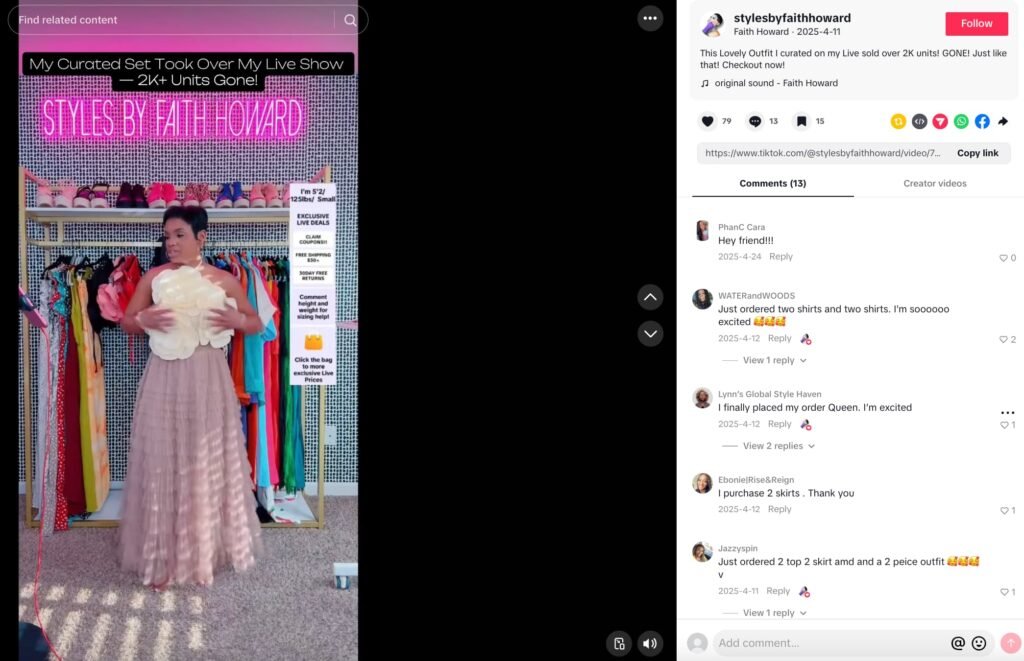
Meanwhile, social platforms are building walled gardens where the entire purchase happens in-app. Instagram checkout. TikTok Shop. Facebook Marketplace with integrated payments. These aren’t complementary channels to your Google Ads campaigns anymore; they’re direct competitors for the same customer at the same moment of intent. And they have one massive advantage: they keep the user inside their ecosystem where they can track everything.
The Attribution Crisis Nobody Wants to Discuss
We’ve been managing paid search campaigns for years, and we’ve watched attribution get progressively murkier. But 2026 is different. When a customer discovers your business through an AI summary, researches you on TikTok, asks an AI agent to compare prices, and finally converts through a retargeting ad three days later, which touchpoint gets credit?
Google’s attribution models weren’t built for agentic commerce. They assume a relatively linear path from search to site to conversion. That model is dying fast. Local businesses running Google Ads in 2026 are going to see their reported conversions diverge increasingly from their actual sales, and most won’t understand why their ‘profitable’ campaigns are somehow not driving business growth.
How Local Businesses Should Actually Respond
Stop chasing the social commerce hype train unless you’re selling products that people impulse-buy while scrolling. For service businesses, restaurants, medical practices, and professional services in LA and Glendale, the answer isn’t abandoning Google Ads for TikTok Shop. It’s adapting your paid search strategy to the AI-mediated reality.
Here’s what actually works:
- Optimize for answer engines, not just search engines: Your ad extensions and landing pages need to answer the exact questions AI agents ask. Price ranges, availability, service area, credentials. Make it dead simple for an AI to extract and compare your information.
- Build structured data like your business depends on it: Schema markup isn’t optional anymore. Local business schema, FAQ schema, product schema for service businesses. If an AI agent can’t parse your data, you don’t exist in agentic commerce.
- Track beyond the click: Implement server-side tracking, use call tracking religiously, and set up offline conversion imports. Your Google Ads dashboard is lying to you about performance. Build systems that capture the full picture.
- Test conversational ad copy: People are searching differently when they use AI. “Best plumber near me” is becoming “I have a burst pipe in Glendale, who can come today and what will it cost?” Your ads and landing pages need to match that natural language intent.
- Claim every inch of your digital real estate: Google Business Profile, review sites, social platforms, directories. AI agents scrape all of it. An incomplete profile on Yelp or Facebook could be why an AI agent recommends your competitor instead.
The Local Angle: Why This Hits Different in LA
Los Angeles and Glendale businesses face unique challenges in this landscape. High competition means your Google Ads for local business 2026 campaigns are already expensive. Now add AI-mediated discovery pulling customers away from traditional search, and your cost per acquisition is climbing while your visibility drops.
But there’s an opportunity here that most local competitors are missing. Digital marketing in Los Angeles has always required agility. The businesses that win in 2026 are the ones who recognize that paid search isn’t dead, it’s just one piece of a much more complex puzzle. Your Google Ads campaigns need to work in concert with your organic visibility, your review management, your social presence, and your structured data. That integrated approach is what keeps you visible whether a customer finds you through traditional search, AI summary, or social discovery.
The social commerce boom is real, but it’s not replacing local search for service businesses. What’s actually happening is more insidious: the customer journey is splintering across so many touchpoints that traditional campaign management can’t keep up. Local businesses that acknowledge this reality and adapt their measurement, targeting, and content strategy accordingly will thrive. The ones waiting for things to stabilize back to 2019 norms are going to bleed budget wondering why their ads stopped working.
Our Take: Resist the Platform Lock-In
The biggest risk we see for local advertisers isn’t social commerce itself. It’s platform dependency. When you build your entire customer acquisition strategy inside TikTok’s walled garden or rely completely on Google’s black-box attribution, you’re renting your customer relationships from companies that change their rules constantly.
Smart Google Ads strategy for 2026 means treating paid search as one component of a diversified acquisition system. Yes, optimize for AI agents. Yes, test social commerce if it fits your business model. But never let any single platform own your ability to reach customers. The businesses that maintain control of their data, their customer relationships, and their measurement systems are the ones that survive when the next algorithmic shift inevitably arrives.
