
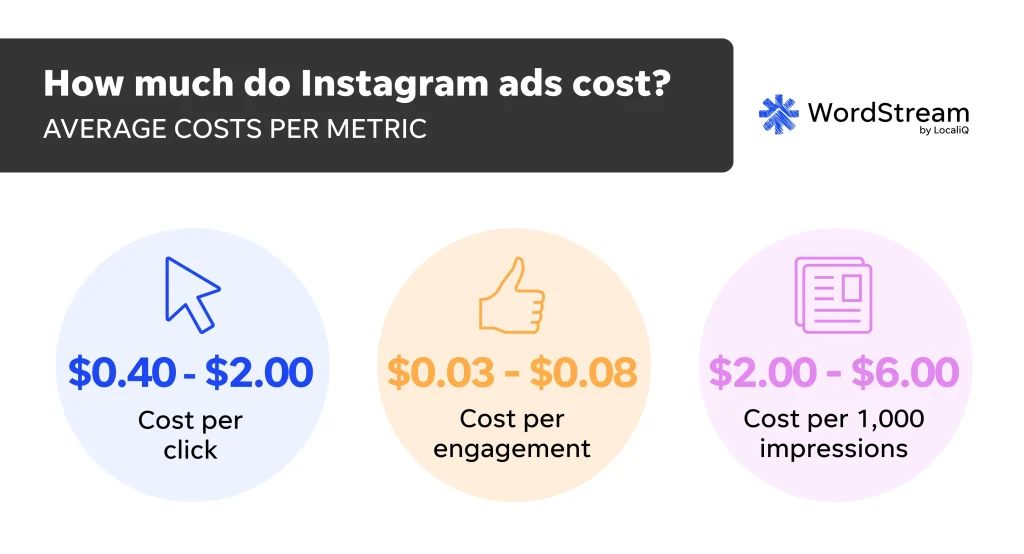
Instagram ads now cost between $0.40 and $2 per click. That number should make you pause, especially if you are burning budget on platform-native content that is not converting. Here is the uncomfortable reality: when you are paying up to $2 just to get someone off Instagram and onto your site, the question of content marketing vs SEO which is better stops being theoretical. It becomes a budget survival question.
We have watched brands pour thousands into Instagram content marketing, convinced that engagement metrics equal business results. Meanwhile, their organic search presence sits neglected, quietly delivering free clicks from people actively searching for what they sell. The 2026 Instagram ad cost data from WordStream’s latest benchmark study forces a reckoning: are you investing in the channel that actually drives revenue, or the one that just feels good?
Instagram Ad Costs Show Why Platform Dependency Is Risky
The cost per click range of $0.40 to $0.70 for general ad clicks sounds reasonable until you realize that includes people simply expanding your ad or tapping like. Want actual traffic to your website? That jumps to $0.50 to $1.20 per click-through. And if you are targeting competitive industries or audiences, you are likely hitting the top of that range or beyond.
Compare this to organic search. Once you rank, clicks are free. Yes, there is an upfront investment in content creation and technical optimization. But you are not paying $1.20 every single time someone clicks through to your site. The math is brutal: a campaign generating 10,000 clicks on Instagram could cost you $12,000. Those same 10,000 organic clicks from search? Zero incremental cost after you have done the ranking work.
This is not to say Instagram ads are worthless. They are not. But when marketers ask content marketing vs SEO which is better, they are often conflating social content marketing with all content marketing. Organic search content is content marketing too. It just happens to live on your domain instead of rented social media real estate.
The Engagement Trap and What It Costs You
Instagram’s cost per engagement sits between $0.03 and $0.08. That sounds cheap. A like for three cents feels like a bargain. But let us be clear about what you are buying: validation, not revenue. Someone double-tapping your ad is not the same as someone searching for your service, clicking your organic result, and converting.
We have seen this play out repeatedly with clients. They come to us thrilled about their Instagram engagement numbers. Thousands of likes. Hundreds of comments. Then we ask about actual conversions and website traffic. Crickets. Or worse, they have traffic but it is low-quality, high-bounce visits from people who were casually scrolling, not actively shopping.
Search traffic behaves differently. When someone types a query into Google, they have intent. They want to learn something, buy something, or solve a problem. Your content marketing efforts are exponentially more valuable when they target that intent through SEO rather than interrupting someone’s feed. This is the core of the content marketing vs SEO which is better debate: intent versus interruption.
Instagram’s CPM (cost per thousand impressions) ranges from $2 to $6 for better-performing campaigns. Brand awareness has value, but if your goal is lead generation or sales, paying for impressions is playing a long game you might not be able to afford. Especially when organic content can generate impressions indefinitely once it ranks.
How to Allocate Budget Between Paid Social and Organic Search
Here is our take after working with dozens of brands navigating this exact question: you need both, but the ratio matters enormously. Start by auditing what you are actually getting from each channel.
Step 1: Calculate your true cost per acquisition from Instagram. Do not stop at cost per click. Track clicks all the way through to conversions. If you are spending $1 per click and your conversion rate is 2%, you are paying $50 per conversion. Can your business model support that? If not, Instagram is a leaky bucket.
Step 2: Audit your current organic search performance. Use Google Search Console to see what queries are already driving traffic. Are you ranking on page one for any commercial intent keywords? If not, you have enormous untapped potential. A solid SEO strategy here could deliver traffic at zero marginal cost.
Step 3: Test content on your domain first. Before you create an Instagram carousel ad, try creating a blog post or landing page targeting the same message and keyword. See if you can rank organically. If you can, you have just saved yourself thousands in ad spend. If you cannot rank quickly, then consider paid amplification through Instagram or Google Ads.
Step 4: Set a budget ceiling for social ads. We recommend no more than 30-40% of your total marketing budget on paid social if you are a small to mid-size business. The rest should fund content creation, technical SEO, and link building that compounds value over time. Instagram ads stop working the moment you stop paying. Organic content keeps working.
Step 5: Track lifetime value, not just first touch. Instagram ads can introduce new audiences to your brand. But if those audiences do not convert until they later search for you on Google and click an organic result, attribution gets messy. Make sure you are not double-counting or over-crediting paid social just because it has better last-click attribution.
For Small and Local Businesses
If you are running a local service business or a small e-commerce shop, the stakes are even higher. You cannot afford to waste budget on channels that do not convert. Instagram might deliver awareness, but a plumber in Pasadena probably gets more qualified leads from ranking for ’emergency plumber Pasadena’ than from a sponsored post in someone’s feed.
We worked with a local HVAC company that was spending $3,000 per month on Instagram ads with minimal return. They shifted $2,000 of that budget into local SEO and content targeting high-intent service queries. Within six months, organic search was driving 70% of their inbound leads. Instagram still had a role, but it became a supplement, not the foundation.
The truth about content marketing vs SEO which is better is that they are not mutually exclusive. But one is a rental agreement and the other is an asset purchase. Instagram content lives on their platform under their algorithmic rules. SEO content lives on your domain and you control it. Budget accordingly.
Yes, Instagram offers sophisticated targeting. Yes, the creative formats are engaging. But at $0.50 to $2 per click, you are essentially paying a tax to reach an audience that might already be searching for you on Google for free. That is the cost of platform dependence. And in 2026, with ad costs climbing and organic reach on social platforms shrinking, betting your entire content marketing strategy on paid social is a gamble most small businesses cannot afford to take.
Sources
- How Much Do Instagram Ads Cost in 2026? – WordStream
