
If you run marketing for a B2B company, you have probably noticed something frustrating: your LinkedIn posts get decent engagement, but they are not bringing in leads. Your product pages exist, but nobody seems to find them organically. The culprit is usually the same problem that plagues ecommerce brands: your content is built for one channel, but your buyers search everywhere.
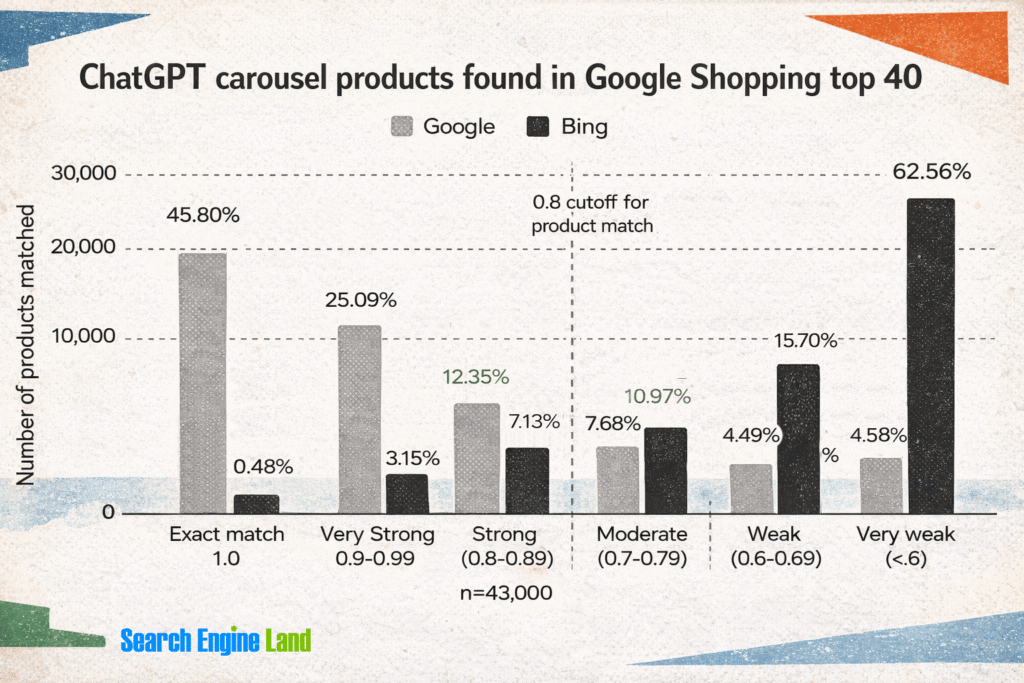
A recent analysis of product feeds in AI search reveals a pattern that every B2B marketer should understand. Up to 83% of products shown in ChatGPT’s shopping carousel match Google Shopping’s organic results, with 60% of those matches coming from the top ten positions. The common thread? Brands that treat their product information as a strategic asset across multiple surfaces win visibility. The ones that silo it under paid media lose out.
This matters for LinkedIn because B2B buyers behave the same way. They search on Google, browse LinkedIn, ask AI tools for recommendations, and check your website, sometimes all in one research session. When your messaging is inconsistent across these touchpoints, you lose trust and visibility. When it aligns, you show up everywhere they look.
Why B2B Companies Need Cross-Channel Content Consistency
Most B2B marketing teams operate in silos. The person running LinkedIn ads writes headlines optimized for click-through rates. The SEO team writes product page titles for search engines. The sales team has its own pitch deck with completely different language. Nobody coordinates.
This approach worked when buyers only checked two or three sources before making contact. It does not work now. According to the same research on AI shopping results, Google’s Shopping Graph contains more than 50 billion product listings and feeds directly into AI Overviews, AI Mode, and Gemini. AI Overviews now appear in roughly 14% of shopping queries, up from about 2% in late 2024. The systems powering these results reward semantic consistency, not clever ad copy that differs from your actual product information.
For B2B companies, this means your LinkedIn Company Page description should mirror your homepage meta description. Your LinkedIn article headlines should reflect the language your target accounts actually use when searching. Your employee profiles should mention the same core services you optimize for on your website. When a procurement manager searches ‘enterprise workflow automation’ on Google and sees your AI Overview, then checks your CTO’s LinkedIn profile and reads the same terminology, you build authority. When the language is completely different, you create confusion.
LinkedIn Marketing Tips for B2B Companies: Start With Search Intent
Here is where most B2B LinkedIn strategies fall apart: they start with what the company wants to say, not what the buyer wants to find. Your CEO wants to talk about innovation and disruption. Your prospects are searching for ‘how to reduce invoice processing time’ or ‘best CRM for manufacturing companies.’
Apply the same thinking that works for product feeds. Before you write a single LinkedIn post, answer these questions:
- What exact phrases do your ideal customers type into search engines when they have the problem you solve?
- What questions do they ask in industry forums, Slack groups, or Reddit threads?
- What terms appear in the RFPs you win versus the ones you lose?
- Which competitors rank for the keywords you want to own, and what language do they use?
Once you have that list, use those phrases in your LinkedIn content naturally. Not stuffed into every sentence, but present. If ‘enterprise contract management software’ is a core search term for your business, mention it in your Company Page description, in your CEO’s headline, in the first paragraph of your most important articles, and in your employee bios where relevant. When someone searches that phrase and lands on your website, then checks your LinkedIn to see if you are legitimate, the consistent terminology reinforces that you are the right choice.
How to Build a Cross-Channel Content Strategy That Works
The ecommerce brands winning in AI search are not creating separate feeds for every platform. They are building one source of truth for product information and adapting it intelligently for each surface. B2B companies should do the same with their positioning and messaging.
Step one: Create a master document that lists your core service offerings, the search terms associated with each, and the three to five key benefits for each service. This is your source of truth. Everyone on the marketing team should reference it.
Step two: Audit your existing LinkedIn presence against that document. Does your Company Page mention your core services using the language buyers actually search for? Do your top employees have profile headlines that include relevant keywords? Do your most recent posts discuss the topics your target accounts care about, or are they generic thought leadership that could apply to any industry?
Step three: Align your LinkedIn content calendar with your SEO strategy. If you are targeting ‘supply chain visibility software’ as a keyword cluster on your website, publish LinkedIn articles and posts about supply chain visibility. Interview customers about how they improved supply chain visibility. Share case studies. The goal is not keyword stuffing. The goal is topical authority across every platform where your buyers spend time.
Step four: Use LinkedIn’s native tools to reinforce your organic presence. LinkedIn Articles appear in Google search results. Company Page updates can rank for branded queries. Employee posts from team members with optimized profiles get more reach than corporate posts. Treat your entire LinkedIn footprint as an extension of your website’s information architecture, not as a separate marketing channel.
Step five: Measure what matters. Track not just LinkedIn engagement metrics, but how often your LinkedIn content appears in organic search results for your target keywords. Use Google Search Console to see if your LinkedIn Articles are driving impressions and clicks. Monitor whether prospects who visit your LinkedIn Company Page are more likely to convert than those who do not. Connect the dots between visibility and revenue, not just likes and comments.
For Small and Local Businesses
If you are a small B2B company with limited resources, you do not need a separate team managing LinkedIn and another managing SEO. You need one person who understands both and can coordinate the message. Start with your five most important service pages on your website. Make sure your LinkedIn Company Page description mentions all five services using the exact terms people search for. Update your personal LinkedIn profile to include those terms naturally in your headline and About section.
Then commit to publishing one piece of LinkedIn content per week that ties directly to one of those five core services. It could be a short post, a poll, or a longer article. The key is consistency and keyword alignment. If you sell social media marketing services to dental practices, write about ‘social media marketing for dentists,’ not ‘the power of authentic storytelling in healthcare.’ Authenticity matters, but so does being found.
Over three months, you will build a body of LinkedIn content that reinforces your website’s core themes. Buyers searching on Google will see your website. Buyers searching on LinkedIn or checking your profile after a referral will see the same message. That consistency builds trust faster than any single clever campaign.
Why This Approach Works Now
AI-powered search is not replacing traditional search behavior. It is amplifying it. The systems pulling product recommendations into ChatGPT or generating AI Overviews are not inventing new information. They are synthesizing existing data from the web, and they reward sources that demonstrate consistent expertise across multiple surfaces. A B2B company that publishes thoughtful LinkedIn content, maintains an optimized website, and ensures its team members have strong profiles will outperform a competitor that invests heavily in paid ads but has weak organic signals.
Among the best LinkedIn marketing tips for B2B companies is this: stop treating LinkedIn as a social network and start treating it as a search engine with social features. Buyers use it to research vendors, vet companies, and find expertise. When your content aligns with what they are searching for, you show up. When it does not, you get lost in the noise.
We have seen this play out with clients who initially resisted optimizing LinkedIn content because it felt too transactional. Once they aligned their LinkedIn activity with their SEO keyword targets, organic traffic from LinkedIn increased, and more importantly, the quality of inbound leads improved. People arriving from LinkedIn already understood what the company did because the messaging was consistent everywhere they looked.
Sources
- Why product feeds need an organic strategy for AI search – Search Engine Land
