
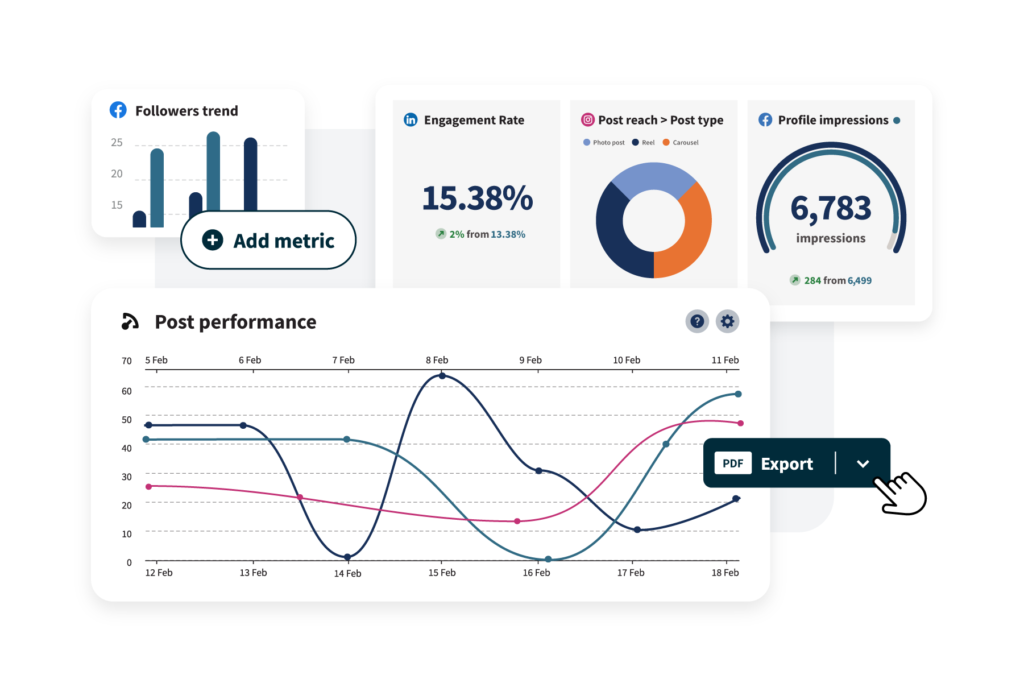
Most small businesses treat social media reports as isolated dashboards. That is a mistake. Without proper technical foundations, you are measuring noise instead of signal.
Why Your Social Reports Probably Miss the Real Picture
- Social platforms report vanity metrics (likes, shares) while ignoring conversion paths and revenue attribution
- Disconnected tracking means you cannot see how social traffic behaves on your actual website
- Poor URL structure and missing UTM parameters make it impossible to attribute ROI accurately
- Without technical SEO foundations, organic social content never gets indexed or ranked properly
- Most teams waste hours manually pulling data instead of building automated systems that scale
The Technical Foundation Nobody Talks About
Here is what we see constantly: A small business invests $5,000 a month in social ads and content. They get a report showing 50,000 impressions and 1,200 clicks. Great numbers, right?
Wrong. Those clicks hit a website with broken tracking, slow load times, and zero conversion optimization. The business has no idea which posts drove sales. They cannot connect social spend to revenue. So next quarter, the CFO cuts the social budget by 30%.
The real problem was not the social strategy. It was the technical infrastructure underneath it.
Smart SEO services build the tracking foundation first. That means proper Google Analytics 4 setup, working conversion pixels, clean URL parameters, and structured data that helps search engines understand your content. When a local bakery client implemented these technical SEO tips for small business operations, they discovered that Instagram stories drove 3x more phone calls than Facebook posts. That single insight shifted their entire content calendar and increased revenue by 18% in four months.
Core Web Vitals Kill Social ROI
Your social report shows strong click-through rates. Perfect. But if those clicks land on pages that take six seconds to load on mobile, you just paid for traffic that bounces immediately.
Google confirmed Core Web Vitals remain a ranking factor in 2026. More importantly for social marketing, page speed directly impacts conversion rates. We tested this with an e-commerce client: improving Largest Contentful Paint from 4.2 seconds to 1.8 seconds increased social-referred conversions by 41%. Same ads. Same content. Just faster pages.
Most social media reporting tools ignore this completely. They show you upstream metrics while your actual business outcomes suffer downstream.
Technical SEO Tips for Small Business Social Tracking
- Build a proper UTM taxonomy now. Every social post needs consistent campaign, source, and medium tags. Create a naming convention document. Stick to it religiously. This is not optional if you want attribution that matters.
- Set up cross-domain tracking correctly. If you use link-in-bio tools, Shopify, or external landing pages, implement cross-domain tracking or your analytics will treat every click as a new session. You lose the entire customer journey.
- Fix your Open Graph and Twitter Card markup. When someone shares your content, search engines and social platforms read this structured data. Broken markup means lost traffic and poor indexing. Test every important page with the Meta Debugger and Twitter Card Validator.
- Implement server-side tracking for accuracy. Browser-based pixels get blocked by ad blockers and privacy tools. We estimate 20-30% of social conversions go unreported with client-side tracking alone. Server-side Google Tag Manager fixes this.
- Create XML sitemaps for your social content. If you publish videos, podcasts, or rich media through social platforms, submit dedicated sitemaps to Google Search Console. This helps organic discovery beyond the platform itself.
- Monitor technical errors that break social traffic. Set up alerts for 404 errors, redirect chains, and broken mobile experiences. One client lost $12,000 in social ad spend over three weeks because a site migration broke mobile product pages. Their social report looked fine. Their revenue did not.
What LA Businesses Get Wrong About Social Reporting
We work with dozens of small businesses across Los Angeles, from Venice Beach boutiques to Burbank production companies. The pattern is always the same. They want better social media performance, but they skip the technical groundwork.
A restaurant group came to us frustrated that their Instagram ads were not working. We checked their website. No schema markup for local business. Wrong address in Google My Business. Broken mobile menu. Slow image loading. Their social campaigns were fine. The technical foundation was not.
After implementing basic technical SEO tips for small business clients, including proper local structured data and mobile optimization, their social ad conversion rate doubled. Not because we changed the ads. Because we fixed what happens after the click.
For businesses serious about connecting social performance to business outcomes, this technical work is not separate from social media marketing. It is the foundation that makes social marketing measurable in the first place.
Stop Reporting Vanity, Start Tracking Revenue
The Hootsuite guide recommends tracking KPIs, measuring campaign success, and identifying optimization opportunities. All true. But none of that matters if your technical setup cannot connect social activity to actual business results.
Set up enhanced e-commerce tracking in GA4. Configure goal completions properly. Build custom reports that show revenue by social source and campaign. Track assisted conversions, not just last-click attribution. Measure customer lifetime value by acquisition channel.
This requires technical work. Schema implementation. Event tracking configuration. Data layer setup. It is not sexy, but it is what separates businesses that prove social ROI from those that just hope their efforts matter.
One furniture retailer we worked with spent $30,000 annually on social content creation. Zero technical tracking. They had no idea which posts drove showroom visits or online sales. After six months of proper technical implementation, they cut content production by 40% and focused only on formats that converted. Revenue from social channels increased by 67%.
The Tools Still Matter
Reporting platforms like Hootsuite Analytics consolidate cross-platform data into single dashboards. That saves real time. But the data quality depends entirely on your technical setup feeding accurate information into those tools.
Use automation where it helps. Set up scheduled reports. Build custom dashboards. But do not trust the numbers until you verify that your tracking infrastructure actually works. Run test conversions. Check that UTM parameters pass through correctly. Confirm that pixels fire on thank-you pages.
We have audited hundreds of small business websites. Roughly 60% have broken or incomplete analytics implementations. They make decisions based on incomplete data. That is worse than having no data at all.
What to Do Tomorrow Morning
Open Google Search Console. Check for crawl errors on pages you promote through social channels. Then open Google Analytics. Look at bounce rates specifically for social traffic sources. If social traffic bounces 20% higher than other channels, you have a technical problem, not a content problem.
Test your site speed on mobile using PageSpeed Insights. Focus on the metrics that impact real users: Largest Contentful Paint, First Input Delay, Cumulative Layout Shift. If any score poorly, fix them before spending another dollar on social promotion.
Finally, document your current tracking setup. What pixels are installed? What UTM parameters do you use? Where do conversions get recorded? Most small businesses cannot answer these questions. You cannot improve what you do not measure, and you cannot measure what you do not track correctly.
